Grow with the Flow Retro SVG: A Designer's Review
As a designer who spends more time staring at stitch maps than most people spend watching television, I am always skeptical when I see a new Graphics file labeled as "ready for embroidery." The gap between a crisp vector on a screen and a tangible finished product under the needle is where many projects fail. Recently, I got my hands on the Grow with the Flow Retro SVG Sublimation design to evaluate its potential for real-world craft business applications. This isn't just about whether it looks cute; it is about whether it can survive the rigors of a commercial embroidery project while maintaining its retro charm.
The First Impression: Mood and Layout
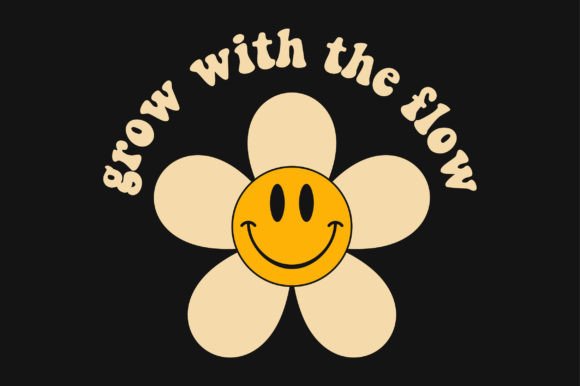
When I first opened the file, the immediate takeaway was the strong visual personality. The "Grow with the Flow" theme carries a distinct 70s-inspired vibe that is currently dominating the handmade product market. The layout feels organic, relying on curved lines and fluid typography that suggest movement. For an Etsy seller or boutique owner, this mood is gold. It speaks to a demographic looking for mindfulness, nature, and vintage aesthetics all rolled into one.
However, from a technical standpoint, the description notes that the file is made with 100 vector shapes. While this is excellent for scalability in sublimation or vinyl cutting, it presents a specific challenge for us as embroiderers. A vector shape is not a stitch type. Before this design can become a machine embroidery design, it requires careful digitizing. The curves look smooth on screen, but will they translate well into satin stitch columns, or will they require complex fill stitch patterns to avoid gaps? My initial assessment is that the open, flowing nature of the design lends itself beautifully to appliqué work or a mix of running and satin stitches, provided the digitizer respects the original line weight.
Real-World Application: The Tote Bag Test
To truly test the viability of Grow with the Flow Retro SVG Sublimation, I imagined a specific client scenario: a custom order for a local yoga studio needing branded tote bag design items for their summer retreat. The goal was a personalized gift feel that also served as durable merchandise.
In this context, the design shines. The retro aesthetic fits perfectly on canvas or heavy cotton twill. If I were to proceed with this as an applique design, I would use the vector shapes as a cutting guide for fabric layers. This approach solves many density issues. By using fabric for the main shapes and only stitching the outlines and text, we reduce the stitch density significantly. This ensures the tote bag remains flexible and doesn't become stiff or board-like, a common complaint with dense commercial embroidery.
For a sweatshirt embroidery project, the same logic applies. The flowing text of "Grow with the Flow" would look stunning stitched in a contrasting thread color against a heather grey fleece. The key here is thread choice. Because the design relies on shape rather than intricate shading, using a matte polyester thread could enhance that vintage, non-shiny look that customers associate with retro styles. This attention to detail directly impacts customer trust and brand consistency.
Technical Considerations and Fabric Challenges
While the design is promising, there are areas where caution is required. The description mentions "easy to change colors," which is true for the vector file, but in embroidery, color changes mean trims and jumps. If the design has too many isolated elements, it can increase production time and the risk of thread breaks. For a small shop product line, efficiency is key.
One major consideration is the hoop size. Depending on how the design is scaled, the sweeping curves might require a larger hoop to prevent distortion, especially on stretchy fabrics. If you are attempting this on a cap or a curved surface, the layout needs to be adjusted to account for the push and pull of the fabric. Stitching fluid lines on a structured front panel can result in waviness if the stabilizer isn't robust enough. I strongly recommend using a cut-away stabilizer for this design if it is going on garments that will be washed frequently, like baby clothes or custom apparel.
Furthermore, tiny details can get lost. If the "retro" aspect includes thin decorative lines or small floral accents within the flow, these might need to be thickened during the digitizing process. A running stitch that looks fine on a high-resolution monitor can disappear entirely on a textured towel or a dark fabric. Always test your digital embroidery file conversion on scrap fabric that matches your final material. Do not skip this step, especially if you are selling holiday embroidery gifts where returns can hurt your reputation.
Maximizing Visual Appeal and Value
The true value of Grow with the Flow Retro SVG Sublimation lies in its versatility. It is not just a picture; it is a design asset that can be adapted. For commercial embroidery, this means you can offer it as a patch, a direct stitch, or even a hybrid sublimation-and-embroidery piece. Imagine the text embroidered in white thread while the background shapes are sublimated onto a polyester performance tee. This hybrid approach creates a unique printed mockup look that stands out in a crowded marketplace.
For creative entrepreneurs, the professionalism of the final output depends on execution. Clean edges, proper tension, and thoughtful color contrast turn a simple graphic into a premium item. When a customer holds a pillow cover or an apron featuring this design, they should feel the quality immediately. That tactile experience drives buyer engagement and word-of-mouth referrals.
Final Verdict for Makers and Sellers
Is Grow with the Flow Retro SVG Sublimation ready for your next project? Yes, but with conditions. It is a fantastic starting point for Crafts enthusiasts and professionals alike, provided you respect the transition from vector to thread. It excels in applications where its retro soul can breathe—think nursery decor, boutique branding, and lifestyle accessories.
Before you list this as a printable mockup or start stitching batches for your Etsy listings, remember to verify the license terms. Just because a file is purchasable does not automatically grant unlimited commercial rights for physical goods versus digital resale. Check the specific agreement included with the AI, EPS, SVG, and PNG files.
In conclusion, this design offers a strong foundation for creating meaningful, stylish products. With the right digitizing strategy, appropriate stabilizers, and a keen eye for fabric texture, Grow with the Flow Retro SVG Sublimation can be the centerpiece of a successful handmade shop collection. It invites the maker to slow down, consider the materials, and create something that truly flows with the needs of the modern consumer.