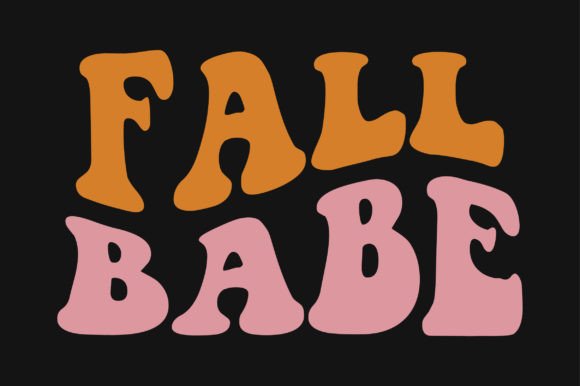
Fall Babe Retro Wavy SVG: A Designer's Stitch Review
As a designer who spends more time staring at stitch maps than most people spend on their phones, I approach new design assets with a healthy dose of skepticism. We've all been there: you download a file that looks crisp on the screen, only to find it turns into a bird's nest of thread once it hits the fabric. That is why I took a close look at the Fall Babe Retro Wavy SVG Vector T-shirt design before committing it to any client work or handmade product lines. This isn't just about whether it looks cute; it is about whether it survives the reality of the embroidery hoop.
The first impression of this graphic is undeniably strong. It captures that specific retro 70s vibe that has dominated the Crafts and Graphics markets recently, but with a layout that feels intentional rather than generic. The "wavy" text element suggests movement, which is great for visual interest but can be tricky when translating vectors into machine embroidery design formats. The mood is playful, autumnal, and slightly nostalgic, making it a perfect candidate for seasonal custom apparel. However, the transition from a scalable vector to a stitched finished product requires a critical eye.
Real-World Application: The Sweatshirt Test
To truly evaluate this piece, I imagined a specific real-life scenario: preparing a custom order for a boutique client who wanted a line of limited-edition sweatshirt embroidery for October. The Fall Babe Retro Wavy SVG Vector T-shirt seemed like the obvious choice for the centerpiece. In this context, the design needs to hold up against brushed fleece or French terry, fabrics that have a bit of give and texture.
The strength of this design lies in its bold shapes. Because the description notes it is made with 100 vector shapes, the potential for clean digitizing is high. When applied to a heavyweight sweatshirt, the retro lettering offers enough surface area for solid fill stitch coverage without looking sparse. The wavy baseline adds a dynamic element that breaks up the rigidity of standard text layouts. For an Etsy seller or small shop owner, this kind of visual personality helps a small shop product stand out in a crowded feed. It feels less like a stock clipart and more like a curated graphic ready for a printable mockup or a physical sample.
However, the "wavy" aspect demands attention during the digitizing phase if you are converting the SVG yourself, or careful inspection if buying a pre-digitized embroidery file. Waves can create awkward jump stitches or dense areas where the angles tighten. In a real project, I would ensure that the curves are smoothed out to prevent the needle from punching too frequently in one spot, which could cause puckering on stretchy fabrics.
Navigating Fabric Challenges and Hoop Limits
While this design shines on a sweatshirt, not every surface is created equal. If you are planning to use this for a tote bag design or a structured cap, you need to consider the hoop size limitations. Retro designs often rely on wide, sweeping lines. If your machine has a smaller hoop, you might be forced to split the design or scale it down, which risks losing the legibility of the "Fall Babe" text. Always measure your available stitching area before promising a customer a specific placement.
Texture is another factor. On a smooth cotton tee, the thread colors will pop exactly as they do in the digital preview. But on a textured linen tea towel or a waffle-knit apron, fine details can get lost. The description mentions the file is easy to change colors, which is a massive plus for adapting to different fabric backgrounds. For dark fabrics, you will want to ensure your digitizing includes a proper underlay to prevent the fabric grain from showing through the satin stitch borders or fill areas. Without that foundation, the retro aesthetic can look muddy rather than vibrant.
Caution is also advised for very small applications, like a pocket logo on a child's baby embroidery item. The wavy text might become illegible if scaled down too far. In these cases, simplifying the design or removing the smallest decorative elements might be necessary to maintain clarity. Remember, what looks sharp on a 4K monitor doesn't always translate to a 2-inch hoop.
Commercial Viability and Brand Consistency
For those running a craft business, consistency is key to building customer trust. The Fall Babe Retro Wavy SVG Vector T-shirt offers a level of professionalism that can elevate a brand. When a customer receives a personalized gift or a piece of holiday embroidery that looks precise and well-executed, it reinforces the value of your work. This design has the potential to be a signature piece for an autumn collection, provided the stitching quality matches the graphic's potential.
The versatility of the vector format means you can easily adapt this for various commercial embroidery projects beyond clothing. Think of embroidered patches, pillow covers, or even layered appliqué on a denim jacket. The ability to resize without losing quality (as noted in the file description) is crucial for creating a cohesive product line where the same motif appears in different sizes across different items. This flexibility allows for better inventory management and creative freedom.
Essential Notes for the Practical Designer
Before you launch this into production, here are my practical recommendations based on years of trial and error:
- Test on Scrap First: Never skip the test stitch-out. Use the exact fabric and stabilizer combination you plan to use for the final product. This reveals issues with stitch density and registration before you ruin good material.
- Check Contrast: While the file allows for easy color changes, ensure your chosen thread colors provide enough contrast against the fabric. Retro palettes sometimes use muted tones that can blend together poorly on certain backgrounds.
- Stabilizer Selection: For knits like sweatshirts, a cut-away stabilizer is usually best to prevent distortion over time. For woven tote bags, a tear-away might suffice, but always prioritize stability over ease of removal.
- Inspect Small Details: Look closely at the intersections of the wavy lines. These are common trouble spots where threads can bunch up. You may need to manually adjust pull compensation in your software.
- Licensing Verification: Although the file description suggests it is ready for use, always double-check the specific license terms regarding digital embroidery file redistribution versus selling physical finished products. Protect your business by knowing exactly what you are allowed to sell.
- Mockup Testing: Create both light and dark mockups. Sometimes a design relies heavily on a white background to define its edges, and it may need an outline or backing adjustment when placed on black fabric.
In conclusion, the Fall Babe Retro Wavy SVG Vector T-shirt is a promising asset for the right project. It brings a trendy, retro energy that resonates with current market demands in the Crafts sector. However, its success depends entirely on the execution. By respecting the limitations of your machinery, choosing the right materials, and performing due diligence with test stitches, you can turn this vector graphic into a standout embroidered patch, a best-selling tee, or a cherished holiday gift. It is a tool that rewards precision and punishes haste, much like the art of embroidery itself.