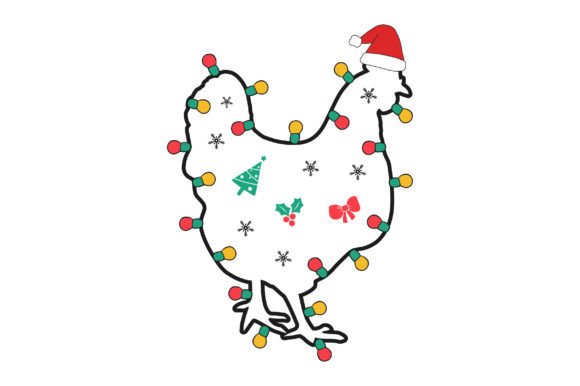
Chicken Christmas Light SVG Sublimation Review
As a designer who spends more time staring at stitch simulations than I do sleeping, I approach new design assets with a healthy dose of skepticism. We have all been there: you buy a cute graphic, load it into your software, and realize the lines are too thin for satin stitch or the details will vanish on a textured towel. That is why I took a close look at the Chicken Christmas Light SVG Sublimation file. While this product is marketed primarily for sublimation and print, my job is to see if it can cross over into the world of machine embroidery design for those of us running hybrid shops.
The first impression of this graphic is undeniably cheerful. There is a specific mood it creates—a blend of farmhouse rustic and holiday whimsy that feels very current. The layout features a chicken, likely a hen or rooster depending on your color choices, wrapped in or interacting with Christmas lights. For an Etsy seller or boutique owner, this visual personality hits the sweet spot for customers looking for "ugly Christmas sweater" vibes without actually wearing a sweater. It screams "holiday party host" or "cozy kitchen decor."
Translating Vector Shapes to Stitch
The product description notes that the file is made with 100 vector shapes and is easy to change colors. From an embroidery perspective, this is a double-edged sword that requires careful handling. Because the original intent is sublimation, the lines are crisp and continuous. When we talk about converting this into an embroidery file, we have to think about how thread behaves differently than ink.
If you are planning to use this as a base for a custom project, the "easy to change colors" feature is a massive plus. It means you can quickly test how the design looks in traditional red and green versus a modern palette of blush pink and gold. However, you must inspect the small details. In sublimation, a tiny strand of light wire can be one pixel wide. In embroidery, that same line needs enough width to hold a running stitch or a narrow satin stitch. If you digitize this yourself or hire someone to do it, pay close attention to those light strands. If they are too thin, they will break or look like a jagged mess on anything other than high-count linen.
Real-World Application: The Holiday Tote Bag
Let's walk through a real-life scenario where I would actually use this. Imagine a client comes in needing a set of matching tote bags for a family Christmas gathering. They want something fun but not overly childish. The Chicken Christmas Light SVG Sublimation is perfect for this. I would visualize this design centered on a natural canvas tote bag design.
For this application, I would likely lean towards an appliqué approach. Since the graphic has distinct shapes (the chicken body, the comb, the lights), cutting fabric pieces for an applique design would give it a fantastic textured look that flat stitching cannot achieve. You could use a flannel scrap for the chicken to add warmth and a shiny satin ribbon or metallic thread for the lights to mimic the glow. This turns a simple digital graphic into a high-value handmade product that justifies a higher price point at a craft fair.
Alternatively, for a quicker turnaround, this works beautifully as a fill-heavy design on a cotton twill apron. The stitch density would need to be managed carefully so the apron doesn't become stiff, but the bold shapes of the chicken allow for generous fill stitch areas that cover well and look professional.
Fabric Considerations and Limitations
While the design is versatile, it is not universal. You need to be strategic about where you place it. On a smooth, tight-weave fabric like broadcloth or high-quality polyester blends, the details of the Christmas lights will pop. However, if you are attempting this on a heavily textured waffle weave or a fuzzy fleece sweatshirt embroidery project, you might lose the definition of the smaller elements.
I would also advise caution with dark fabrics unless you are confident in your digitizing skills. Sublimation files often rely on the background being white or light to make the colors stand out. If you are stitching this onto a black hoodie, you need to ensure there is a solid underlay or that the chicken shape is fully filled so the dark fabric doesn't peek through the gaps in the lights. Testing the design in black and white mockups before you ever thread the needle is a crucial step to check contrast.
Furthermore, consider the hoop size. If the design is intricate, cramming it into a small 4x4 hoop for a baby onesie might result in lost detail. This graphic feels like it needs room to breathe. It is better suited for medium to large hoops found on standard home machines or commercial setups. For baby embroidery, I would suggest simplifying the light strands or enlarging the overall scale to maintain clarity.
Commercial Viability and Brand Consistency
For small shop product lines, consistency is key. Using a cohesive theme like this chicken motif across different items—pillow covers, tea towels, and custom apparel—builds brand recognition. Customers love collections. If you sell this as a finished item, the whimsical nature of the design builds trust; it shows you aren't just churning out generic monograms, but curating fun, seasonal art.
However, a word of warning regarding licensing: The product description mentions you get AI, EPS, SVG, and PNG files. It does not explicitly state the license terms for commercial embroidery use. As a professional, never assume. Before selling finished items or using this in a commercial embroidery context, you must verify the creator's terms. Some sublimation artists do not allow their vector files to be converted into embroidery designs for resale. Protect your business by checking this first.
Final Designer Notes for Execution
If you decide to move forward with this project, here is my practical checklist for success:
- Test on Scrap First: Always stitch out on the actual fabric you intend to use. Thread tension behaves differently on knits versus wovens.
- Check Stabilizer: For a design with potential dense areas (like the chicken body), use a cut-away stabilizer for garments that will be washed frequently. Tear-away might leave the edges fraying over time.
- Thread Contrast: Don't be afraid to deviate from the screen colors. A variegated thread for the lights could add a dynamic, glowing effect that static sublimation ink can't match.
- Inspect Small Details: Look closely at the connection points between the lights and the chicken. These are weak points in digitizing that need tie-ins or jump stitches managed correctly.
- Verify File Compatibility: Since this is sold as a graphic (Crafts and Graphics category), remember you will likely need to digitize it yourself or hire a digitizer unless you are strictly doing sublimation. It is not a pre-made stitch file.
In conclusion, the Chicken Christmas Light SVG Sublimation is a charming asset with strong potential for the holiday season. It bridges the gap between digital art and tactile crafts beautifully, provided you respect the limitations of thread and fabric. With the right preparation and a bit of creative digitizing, this design can elevate your finished product from a simple craft to a cherished holiday keepsake.